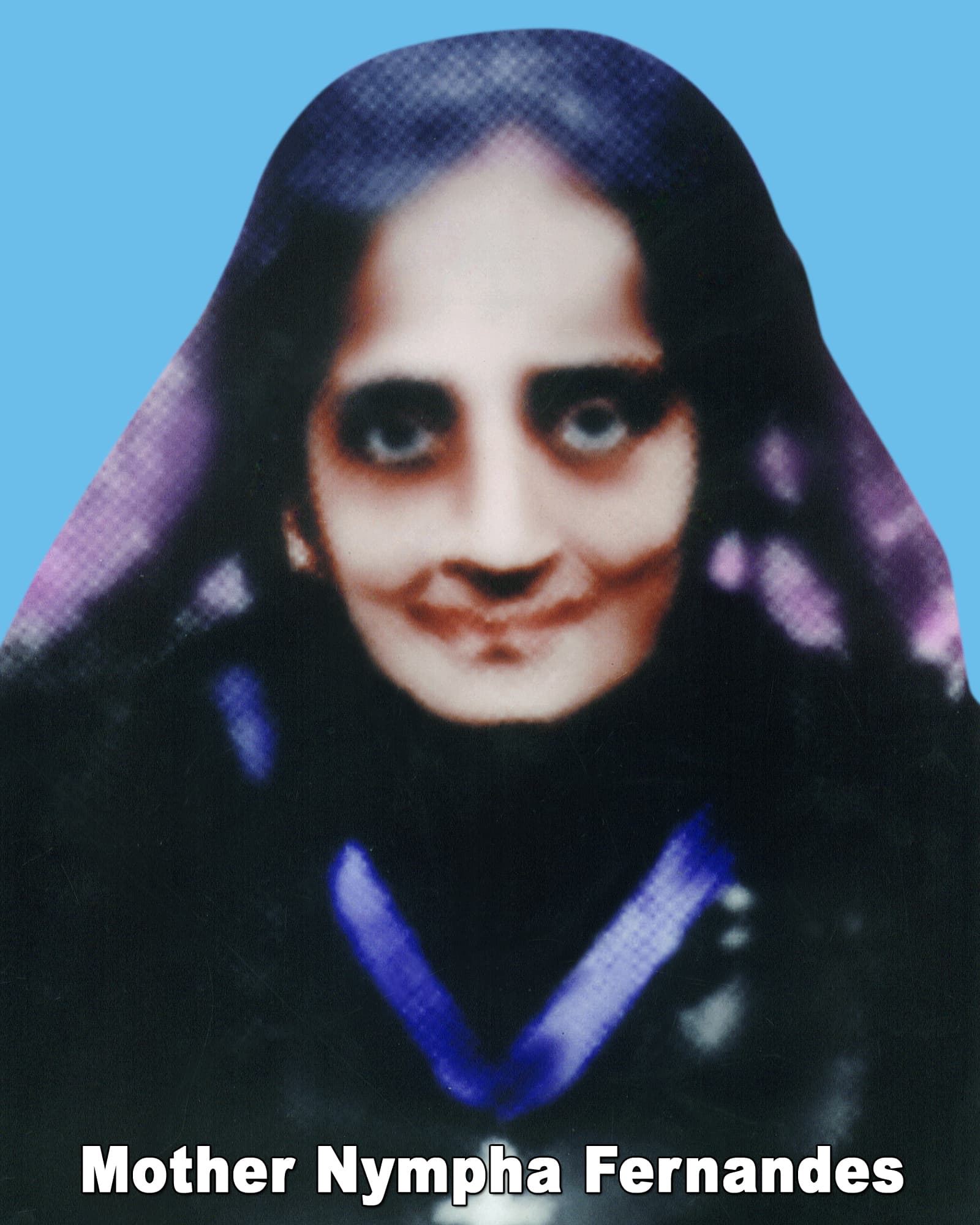
The First Superior of the Company of St. Ursula
Mother Nympha Fernandez holds a unique and honoured place in the history of the Ursuline Franciscan Congregation. She was the first Superior of the Company of St. Ursula, the small band of dedicated women from Mangalore whose humble beginnings eventually grew into a religious Congregation serving people in many parts of the world. She was not merely a leader by position; she was a woman of deep faith, courage, generosity, and vision who gave herself wholeheartedly to the work entrusted to her.
Nympha Fernandez was born in Mangalore in 1850 to John Francis Fernandez and Anna Lobo. She received her early education from the Sisters of St. Joseph of the Apparition and later continued her studies under the Carmelite Tertiaries. During these years, she gradually developed a strong spiritual life and a spirit of leadership. She became the first president of the Sodality of the Children of Mary and was re-elected several times, revealing the trust that others already placed in her. Her generous nature and readiness to sacrifice for Christ prepared her for the greater mission that lay ahead.
The decisive moment came when Fr. Urban Stein SJ, the parish priest of Rosario Cathedral, gathered a group of young Catholic women who desired to serve God and the people around them. The group became known as the Company of St. Ursula, founded on Easter Sunday, 10 April 1887. Nympha, who had emerged as a natural leader among the young women, became its first Superior. The Company was inspired by the spirituality of St. Angela Merici and the example of St. Ursula, with a special concern for the poor, the neglected, the sick, and those who lacked opportunities for education.
The women soon became known for their compassionate service among the people of Bundar, the old port area of Mangalore. They reached out particularly to children and women who were deprived of education and opportunities. Their work was simple, practical, and deeply human. They instructed children in their faith, encouraged education, visited the sick, helped the neglected, and worked for the moral and social uplift of the people. Because of their loving service, they came to be affectionately remembered as the “Angels of Bundar.”
Mother Nympha’s leadership was tested severely when Fr. Urban Stein died unexpectedly in 1888. The little Company could easily have lost its direction without its founder. Instead, Nympha courageously accepted the responsibility of guiding the young community. She held the members together, preserved the ideals given to them by Fr. Stein, and encouraged them to remain faithful to their vocation. The Ursuline Franciscan Congregation itself describes her as a pioneer, transformative leader, and a woman whose maternal concern for every member was one of the great strengths of the infant Company.
Her leadership was expressed not through authority alone but through motherly care, personal sacrifice, prayer, and practical wisdom. She drew strength particularly from the Eucharist and remained committed to the spiritual formation of the members. In the difficult years following the death of Fr. Stein, her courage kept the little community alive and moving forward. What might have become the end of a promising beginning instead became the foundation for a much greater work.
Mother Nympha also understood that the growing Company needed a permanent home. Through her initiative, the first house of the Company was established behind Rosario Cathedral in 1901. This simple foundation became a lasting memorial to the pioneers and is remembered today as the Foundation House of the Ursuline Franciscan Congregation. The building and the heritage associated with it continue to recall the humble beginnings of the congregation and the pioneering efforts of Mother Nympha.
Her life was one of quiet but extraordinary dedication. She did not seek recognition or greatness. Her strength came from her faith and her conviction that whatever was done for God and for the people was worth every sacrifice. From a small group of young women in Mangalore grew a movement that would eventually develop into the Ursuline Franciscan Sisters, with a mission extending far beyond its original surroundings.
Mother Nympha died on 24 February 1909, after years of devoted service. She left behind not merely a congregation but a spirit—a spirit of prayer, sacrifice, compassion, courage, and service. Her life became inseparably woven into the story of the Ursulines of Mangalore.
Mother Nympha Fernandez may rightly be remembered as a mother, pioneer, leader, and woman of faith. She received a small seed and, with God's grace, protected it through difficult beginnings. She nurtured it with prayer, strengthened it through sacrifice, and handed it on to those who would continue the work. The Congregation that grew from that humble beginning stands as a living testimony to her faith and perseverance.
Her story reminds us that great institutions often begin with a few people who are willing to say yes to God, to serve without seeking recognition, and to remain faithful when the future is uncertain. In the history of the Ursuline Franciscan Congregation, Mother Nympha remains one of those courageous women whose quiet fidelity helped turn a small Company into a lasting mission “For the Love of God.”
